
Industrial facilities optimize production by integrating biomass, solar, and wind power through automated systems that fine-tune resource efficiency and heat recovery. Adopting renewable energy for industrial plants reduces operational costs while ensuring reliable steam and electricity generation for continuous manufacturing processes.
Industrial operators face the mounting pressure of volatile energy prices and rigorous sustainability mandates that threaten production margins. While the transition to greener power was once a secondary concern, it has now become a central pillar of operational resilience and cost management. At Main Technologies, C.A., we recognize that integrating renewable sources requires more than just hardware; it demands a sophisticated synergy between technology and strategy. In this guide, we explore the evolution of industrial energy, from the strategic deployment of biomass and thermal recovery to the indispensable role of automation in maintaining grid stability. We will also detail the critical importance of INPSASEL certification for safety compliance and examine how these solutions drive sustainability within high stakes sectors like Oil and Gas. Readers will gain a practical roadmap for transforming their energy infrastructure into a competitive advantage.
The Evolution of Renewable Energy for Industrial Plants
Industrial facilities are shifting toward renewable energy for industrial plants, but the motivations differ significantly from residential applications. For heavy industry, the requirements go beyond carbon footprints. Process manufacturing depends on reliability, the management of high thermal loads, and long term cost consistency. Unlike commercial sectors that might focus on offset credits, the metalworking, food and beverage, and agro-industrial sectors require baseload power and process steam that can handle rigorous production cycles.
Sustainability is a noble goal, yet the primary driver for local firms is often energy independence. In regions like Barquisimeto and across Venezuela, where grid stability fluctuates, relying on external power sources introduces operational risks. Implementing soluciones en energías renovables allows plants to mitigate these risks by generating power or thermal energy on site. This evolution moves renewables from being a secondary green supplement to becoming a core component of operational efficiency. Through sophisticated instrumentación y automatización industrial, these sources are integrated into existing workflows, ensuring that the transition to biomass, wind, or solar supports the high intensity demands of modern manufacturing without sacrificing the precision required in operaciones de petróleo y gas or other critical sectors.
Leading Renewable Sources for Industrial Applications
To achieve operational independence, engineers must evaluate which source provides the necessary energy density and reliability for their specific industrial profile. Selecting the correct technology depends on the thermal requirements, electrical load, and geographical constraints of the facility.
Primary Industrial Renewable Sources
Energy Source | Primary Application | Industrial Profile Match |
|---|---|---|
Solar PV | Auxiliary power and peak shaving | Agro-industrial warehouses and light manufacturing |
Wind | Large scale site energy | Remote upstream sites and high-consumption complexes |
Hydraulic | Consistent baseload power | Heavy processing plants requiring 24/7 reliability |
Biomass | Process steam and thermal heat | Food and beverage; agro-industrial processing |
Solar Photovoltaic (PV) systems are primarily utilized for auxiliary power. They are an ideal fit for agro-industrial warehouses that possess extensive roof surface areas. While intermittent, solar is highly effective for reducing demand during peak utility hours, especially when integrated with instrumentación y automatización industrial to balance the load between the grid and on-site generation.
Wind Energy is best suited for large scale sites with consistent wind patterns. Turbines can generate significant wattage for high-consumption industrial complexes. In specialized operaciones de petróleo y gas, wind power is increasingly used to energize remote upstream extraction sites, significantly reducing the logistical burden and environmental impact of transporting diesel to isolated areas.
Hydraulic Power offers the most consistent baseload for industrial facilities located near viable water sources. Unlike solar or wind, hydraulic energy provides the high reliability required for heavy industrial processes that cannot tolerate voltage fluctuations or interruptions in power supply.
Biomass remains a critical component of soluciones en energías renovables for sectors requiring high thermal loads. By converting agricultural residues into energy, food and beverage plants can generate the process steam and heat necessary for sterilization, drying, and cooking. This source bridges the gap between electrical needs and the high thermal demands typical of Venezuelan agro-industrial operations.
Improving Efficiency with Biomass Energy and Thermal Recovery
Biomass represents the most viable path toward thermal self-sufficiency for large scale agro-industrial facilities. In the state of Lara, residues from sugarcane, coffee, and corn processing provide a consistent fuel source that, when managed correctly, reduces the dependency on volatile fossil fuel prices. The process begins with the thermochemical conversion of these organic materials into high enthalpy steam, which is the lifeblood of sterilization, cooking, and drying lines.
The efficiency of this transition depends heavily on the combustion technology employed. Modern biomass boilers utilize vibrating grates to handle varying moisture content in fuel, ensuring that agricultural waste burns completely without clumping or clogging the air intake. For facilities requiring higher energy densities and fuel flexibility, fluidized-bed systems maintain a suspended state of particles, allowing for rapid heat transfer and lower nitrogen oxide emissions even when fuel quality fluctuates.
To maximize the ROI of renewable energy for industrial plants, facilities must integrate Waste Heat Recovery (WHR) boilers into their thermal circuits. These systems capture the thermal energy typically lost through flue gases and redirect it to pre-heat boiler feedwater or satisfy low pressure steam requirements elsewhere in the plant. Implementing these soluciones en energías renovables requires precise instrumentación y automatización industrial to monitor stack temperatures, pressure differentials, and oxygen levels. By fine tuning the air-to-fuel ratio and recovering latent heat, plants can achieve thermal efficiencies exceeding 85 percent. This level of technical control transforms raw agricultural waste into a precise, high performance industrial asset, essential for the demanding production environments found throughout Venezuela.
The Critical Role of Automation and Instrumentation in Renewable Integration

High thermal efficiency in biomass and recovery systems is unattainable without a robust digital architecture. The integration of renewable energy for industrial plants requires a shift from passive monitoring to active, predictive control. Because sources like solar and wind are inherently intermittent, and biomass fuel density can vary, the control system must act as a dynamic stabilizer to protect downstream equipment.
Programmable Logic Controllers (PLCs) and Human Machine Interfaces (HMIs) serve as the central nervous system for these installations. These systems execute high-speed algorithms that balance the variable supply of renewable power with the rigid demands of production lines. In hybrid configurations, where renewable sources run alongside traditional turbines or reciprocating engines, the instrumentación y automatización industrial ensures a seamless transition during fluctuations. This prevents voltage drops or steam pressure loss that could otherwise halt production and damage sensitive machinery.
Precision hardware is vital for operational integrity and safety:
Pressure Transmitters: These are essential for monitoring steam drums in biomass boilers to prevent overpressure events and ensure stable process heat.
Multi-gas Detectors: These units are critical in biomass gasification or anaerobic digestion to monitor syngas composition and identify hazardous leaks in real time.
Flow Meters: High-accuracy meters quantify fuel consumption and steam output, providing the data necessary for ROI calculations and precise process optimization.
Main Technologies, C.A. focuses on the intelligence behind the energy. By deploying advanced sensors and control logic, we ensure that soluciones en energías renovables maintain the same level of predictability as conventional systems. This technical oversight is particularly crucial in operaciones de petróleo y gas, where safety protocols leave no margin for error during the integration of alternative energy sources into existing infrastructures.
Safety and Compliance: INPSASEL Certification for Renewable Thermal Systems
Technological precision must be matched by rigorous regulatory adherence. The implementation of renewable energy for industrial plants often involves high pressure equipment and combustion systems that fall under strict national oversight. In Venezuela, transitioning to biomass boilers or specialized furnaces requires formal certification by INPSASEL to comply with LOPCYMAT standards.
Operating non-certified pressure vessels or thermal recovery units creates significant legal exposure and operational hazards. Main Technologies, C.A. is authorized by INPSASEL to perform these critical inspections, ensuring that your soluciones en energías renovables meet every legal safety benchmark. We conduct comprehensive assessments, including ultrasonic thickness testing and hydrostatic trials, to validate equipment integrity. By aligning advanced instrumentación y automatización industrial with mandatory safety protocols, we provide the documented security required for operational permits. This expert oversight is as vital for agro-industrial facilities as it is for operaciones de petróleo y gas, bridging the gap between sustainable innovation and mandatory industrial safety.
Renewable Energy for Oil and Gas Operations
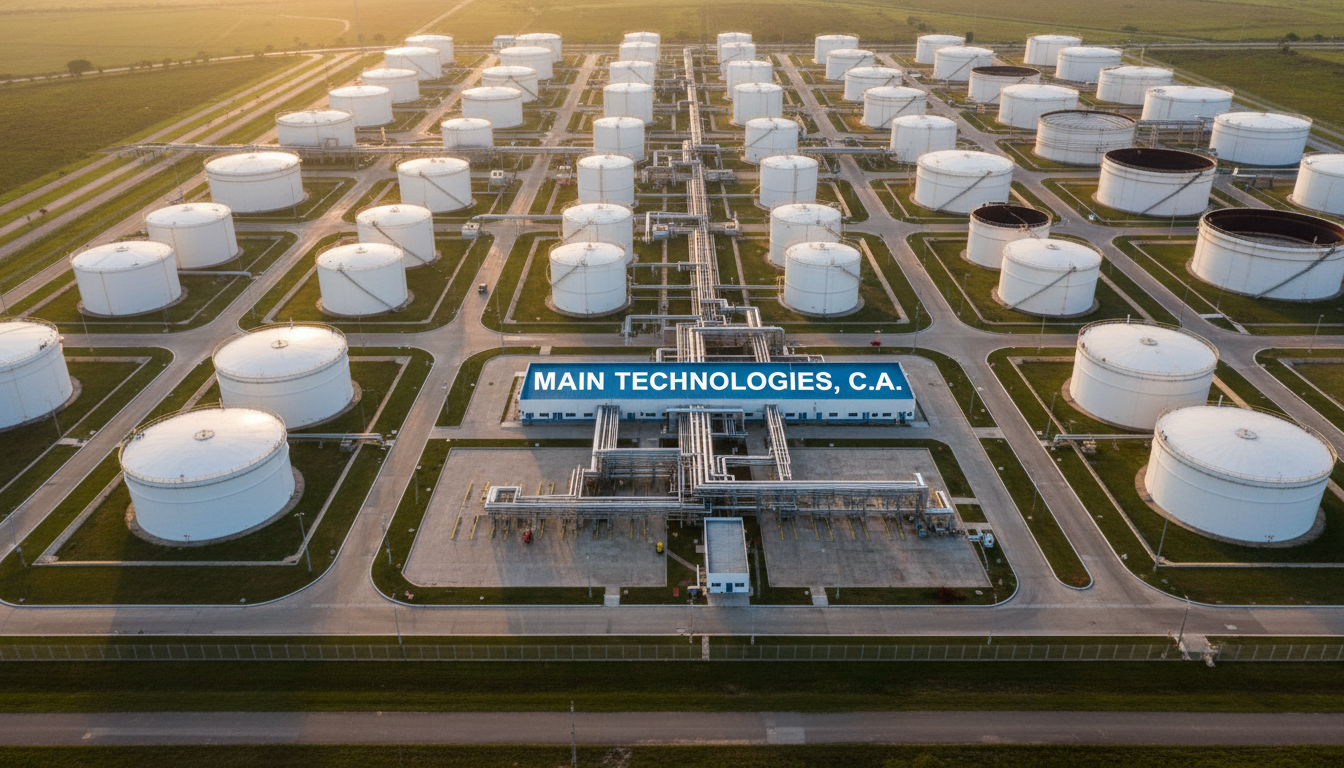
The application of renewable energy for industrial plants extends directly into the demanding environments of the upstream sector. For remote sites located far from stable grid connections, solar PV and wind turbines provide a reliable alternative to the continuous consumption of diesel. By deploying localized energy sources, operators can power critical telemetry, cathodic protection systems, and low-flow pumping units without the logistical burden of fuel transportation to isolated wellheads. This transition significantly lowers operational expenses while maintaining the high availability required for operaciones de petróleo y gas.
A major advantage for Venezuelan firms is the direct transferability of technical expertise. The core instrumentación y automatización industrial used to manage pressure, temperature, and flow in traditional extraction is the same technology required to stabilize renewable infrastructure. For example, the PLC logic used for multi-phase flow measurement is fundamentally similar to the controls needed for hybrid energy systems. Main Technologies, C.A. leverages this existing technical foundation to implement soluciones en energías renovables that integrate seamlessly into oilfield SCADA systems. This technical overlap ensures that the shift toward sustainable power does not compromise the rigorous safety and precision standards that the Venezuelan energy sector demands.
Environmental Measurements and Industrial Sustainability

Establishing a sustainable framework for renewable energy for industrial plants requires rigorous baseline data. Before implementing new energy sources, facilities must conduct environmental measurements to quantify their current footprint and justify the return on investment. Accurate assessments of sound levels, gas emissions, and light intensity provide the empirical evidence needed to align with international standards and local regulations. Through instrumentación y automatización industrial, Main Technologies, C.A. captures these metrics to identify inefficiencies that traditional thermal recovery methods often overlook.
Transitioning to soluciones en energías renovables results in a measurable reduction of nitrogen oxides and sulfur compounds compared to heavy oil combustion. Furthermore, advanced biomass and solar installations produce significantly lower acoustic signatures, improving the occupational environment for technicians in operaciones de petróleo y gas and manufacturing. By documenting these environmental improvements, industrial plants in Barquisimeto and beyond can validate their sustainability targets while ensuring that operational efficiency remains grounded in verifiable technical performance.
Integrating renewable energy into industrial production is a strategic move that enhances efficiency and ensures long-term sustainability. While the benefits are clear, the transition requires technical precision and a deep understanding of infrastructure needs. If you are looking for expert guidance to navigate this evolution effectively, our team is ready to assist. You can learn more about our commitment to excellence and our background by visiting our Quiénes Somos page. We help businesses bridge the gap between traditional operations and a greener future.